

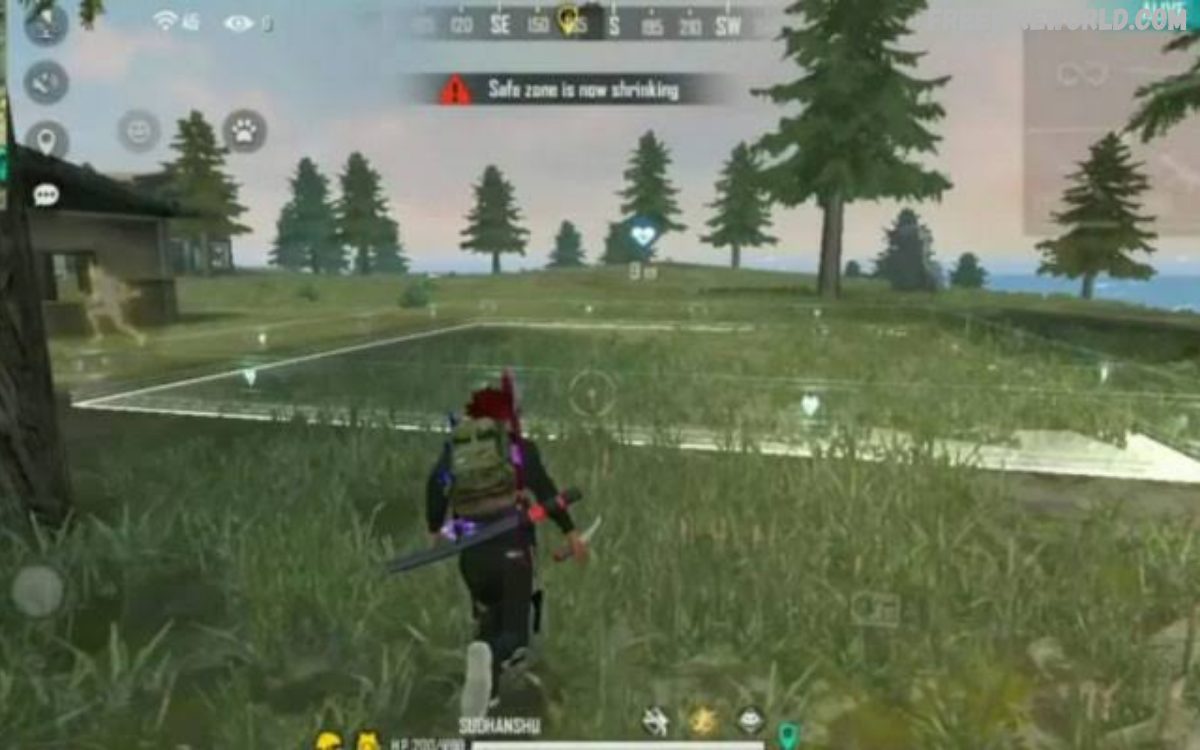
Free Fire Revival Point is a key Battle Royale feature that gives eliminated teammates another chance to return to the match. Instead of letting a squad lose a player permanently after elimination, the revival system creates extra tactical options.
Understanding the Free Fire Revival Point system can make a major difference during squad matches. A successful revival can restore team strength, give another chance in tough fights, and help a squad maintain momentum.
What Is Free Fire Revival Point?
Free Fire Revival Point is a designated location in Battle Royale where players can activate a revival opportunity for eliminated teammates.
The exact mechanics can change between updates, events, and game modes. Earlier versions required players to capture a Revival Point for a specific period, while newer systems have introduced additional revival mechanics and different revival opportunities.
How Free Fire Revival Point Works
The basic idea behind a Free Fire Revival Point is straightforward: an active teammate reaches the designated point, begins the required activation process, and attempts to complete the revival. If the process succeeds, eligible eliminated teammates can return to the battlefield. The revived players normally re-enter the match with limited immediate resources compared with their original starting state.
Players should remember that Revival Point mechanics are not permanently identical. Capture duration, availability, map locations, revival items, and additional benefits can change through patches or special events. For example, Garena has previously modified capture duration, cooldown periods, point counts, and map visibility to balance the feature.
How to Find a Free Fire Revival Point
Finding a Free Fire Revival Point usually starts with checking the in-game map and minimap. Garena has previously introduced systems where Revival Points become visible on the map, making it easier for surviving teammates to identify potential revival locations. Map indicators can help players plan their movement instead of searching randomly across the battlefield.
Map awareness becomes especially important after a teammate is eliminated. A surviving player should consider the current safe zone, nearby opponents, available cover, and the distance to the Revival Point before moving. A Revival Point may provide an opportunity to recover a teammate, but reaching it without considering surrounding threats can create another disadvantage for the remaining squad.
How to Capture a Free Fire Revival Point
Capturing a Free Fire Revival Point requires the surviving player or team to activate the designated location and remain involved until the revival process is completed. The exact activation duration depends on the current version of the game. Previous Garena updates changed revival duration and introduced additional visual indicators to make the capture process clearer.
The capture process should be treated as a team decision rather than an automatic action. Starting a revival can reveal the team’s position or attract attention from nearby opponents. Earlier official patch notes specifically explained that enemies could be alerted when a Revival Point was being activated, which made positioning and timing important parts of the mechanic.
Free Fire Revival Point Strategy
A strong Free Fire Revival Point strategy begins with information. Before activating a point, teammates should understand the surrounding area, check the minimap, monitor enemy activity, and consider whether the revival location is inside a useful part of the safe zone. A revival can be valuable, but poor timing can expose the entire team.
Communication also improves revival success. One teammate can focus on the activation while other surviving players watch nearby approaches and provide information through the team’s communication system. The objective should not simply be completing the revival; the larger goal is returning an eliminated teammate without creating an unnecessary disadvantage for the remaining players.
Best Time to Use Free Fire Revival Point
The best time to use a Free Fire Revival Point depends on the match situation rather than a single fixed rule. Early and middle portions of a match can provide more opportunities for repositioning after a successful revival, while late-game situations may involve tighter zones and greater pressure. Players should always consider the current zone before committing to a revival.
Timing also depends on the number of surviving teammates. If several teammates remain active, the squad may have enough support to protect the revival attempt. If only one player remains, the decision becomes more difficult because that player must balance survival against the need to restore the eliminated teammate. Current game mechanics and event rules should also be checked because revival conditions can change.
Free Fire Revival Point and Teamwork
Teamwork is one of the most important elements of the Free Fire Revival Point system. A revival becomes much more useful when teammates communicate about the destination, movement route, enemy positions, and safe-zone conditions. The revived player can then return to the match with a clearer understanding of the situation instead of immediately moving without information.
Garena has continued to develop revival mechanics around team interaction. Recent updates have introduced new teammate revival systems intended to encourage squads to remain connected during Battle Royale matches. The 2026 anniversary update, for example, described a reimagined Battle Royale revival mechanic designed to create additional opportunities for teammates to return to battle.
Free Fire Revival Point Mistakes to Avoid
One common mistake is activating a Revival Point without first checking the surrounding area. Because the revival process can reveal a team’s activity, rushing directly toward a point may expose the surviving player. A better approach is to evaluate the route, observe nearby movement, and choose an appropriate moment to begin the activation.
Another mistake is treating every revival opportunity as mandatory. A Revival Point should support the team’s overall survival plan, not replace it. If the safe zone is moving away from the point or opponents control the surrounding area, attempting the revival may create unnecessary pressure. Players should evaluate the situation before committing to the process.
Free Fire Revival Point Map Awareness
Map awareness makes Revival Point decisions more reliable. Players should regularly check the minimap for point indicators, teammate locations, zone movement, and other useful information. Earlier updates improved the Revival Point interface by showing capture activity and cooldown information, giving players more information during matches.
Knowing the map also helps players anticipate danger. Some Revival Points may have limited natural protection, while others may be positioned near important areas that attract player activity. Historical Free Fire updates changed point locations and quantities on several maps, demonstrating why players should rely on the current in-game interface instead of memorizing outdated locations.
Free Fire Revival Point in Different Game Modes
Free Fire Revival Point mechanics can differ between game modes. Revival systems have historically appeared in Battle Royale variants, while different modes and special events can introduce alternative methods for bringing eliminated players back. This means players should avoid assuming that a mechanic from one mode automatically applies to another.
Special events can also temporarily introduce unique revival systems. For example, Garena has introduced event-specific revival mechanics that changed how eliminated players returned to matches. The 2026 Fire Kickoff campaign included a temporary Pitch Showdown Revival system, while other updates introduced different revival concepts.
Free Fire Revival Point and Revival Cards
Revival Cards are another important part of the broader Free Fire revival system. In earlier versions, Garena introduced Revival Cards that allowed surviving teammates to redeploy eliminated players through the vending-machine system. This created another recovery option when a traditional Revival Point was not the only available method.
The relationship between Revival Points and Revival Cards has changed across different updates. More recent systems can provide different revival benefits depending on the type of point or card available. Because these mechanics are frequently balanced, players should check current patch notes or the in-game description when a new update changes the revival system.
Advanced Free Fire Revival Point
Advanced Revival Point mechanics can provide additional benefits compared with standard revival opportunities. Garena has introduced Advanced Revival Points in previous updates, including systems where selected points received upgraded status and provided enhanced revival benefits. These mechanics were designed to create stronger strategic choices around specific map locations.
Advanced revival features can also change the value of map positioning. An upgraded point may become a more attractive destination for teams that need to recover an eliminated player and rebuild their resources. However, greater value can also make such locations more contested, so players should combine the potential reward with careful awareness of nearby opponents.
Free Fire Revival Point for Solo Players
Revival mechanics are not limited exclusively to traditional squad recovery. Garena has previously introduced solo-queue revival systems that gave players a limited opportunity to return after early elimination. These systems demonstrate how Free Fire has expanded the concept of second chances beyond the original team-based Revival Point design.
Solo revival mechanics can operate differently from squad revival mechanics. A player may receive a limited revival opportunity during a particular portion of the match rather than relying on a teammate. Because these rules can be tied to specific modes or updates, players should review the current interface and event information to understand whether a revival opportunity is active.
Free Fire Revival Point Benefits
The biggest benefit of a Free Fire Revival Point is the ability to restore a teammate who would otherwise remain eliminated. Bringing a player back increases the squad’s available support, improves its ability to collect resources, and can create another opportunity to compete for the final stages of the match. This makes revival an important strategic layer.
Revival Points also encourage teams to think beyond individual eliminations. A squad that loses one player does not necessarily need to abandon the match or change its entire plan. Instead, surviving teammates can consider whether recovery is possible and whether the revived player can contribute effectively after returning.
Read Also: Jai Free Fire: Complete Character Guide
Free Fire Revival Point Risks
Every revival opportunity carries some risk because the activation process may require players to remain in a particular location. Earlier official updates specifically noted that Revival Points could provide limited cover and that enemy teams could receive information about activation activity. These design choices prevent revival from becoming completely risk-free.
The main risk is losing another teammate while attempting to recover an eliminated player. A successful revival is useful only when the surviving team can maintain control of the situation. Players should therefore evaluate enemy proximity, zone movement, available cover, and escape options before starting the process.
Tips for Better Free Fire Revival Point Decisions
First, prioritize information over speed. Check the map, identify the Revival Point, observe the safe zone, and communicate with teammates before moving. Second, avoid separating from the squad without a clear reason. A coordinated approach gives the team more awareness and makes it easier to react if opponents approach the revival location.
Third, think about what happens after the revival. A revived player may need time to collect resources and reposition, so the team should already have an idea of where to move next. Successful revival is only the first stage; the real objective is turning that second chance into stronger team survival.
Free Fire Revival Point Changes Over Time
Free Fire’s Revival Point system has changed significantly since its original introduction. The first version allowed players to revive an entire team after capturing a point, while later updates changed availability, map coverage, capture difficulty, cooldowns, and interface information. These adjustments show Garena’s ongoing effort to balance second-chance gameplay.
Recent updates demonstrate that revival remains an active part of Free Fire’s gameplay development. Garena’s 2026 updates introduced reimagined Battle Royale revival mechanics and additional teammate-focused systems. Because the feature continues to evolve, players should use current in-game information when determining exactly how a Revival Point operates in their present version.
Why Free Fire Revival Point Matters
Free Fire Revival Point adds another strategic decision to Battle Royale matches. Elimination no longer always means the end of a teammate’s participation, creating opportunities for recovery and comebacks. The system rewards teams that understand positioning, communication, timing, and map awareness rather than relying only on direct combat performance.
For players who want to improve their squad performance, understanding revival mechanics is valuable. A well-timed revival can restore team strength and create new opportunities during the match. At the same time, careless activation can expose surviving players, making thoughtful decision-making essential.
Frequently Asked Questions
What is Free Fire Revival Point?
Free Fire Revival Point is a designated Battle Royale location used as part of Free Fire’s teammate revival system. Its exact function can vary according to the current mode, patch, or event. In general, the system gives eliminated players an opportunity to return to the match.
How do you use a Free Fire Revival Point?
A surviving player generally reaches an available Revival Point and activates the revival process. The required activation method and duration can change with updates, so players should follow the instructions displayed in the current game interface.
Can eliminated teammates return using a Revival Point?
Yes, revival systems are designed to give eligible eliminated teammates another opportunity to enter the match. The exact number of players and revival conditions depend on the active game mode and current version of Free Fire.
Are Free Fire Revival Points always available?
No. Availability can depend on the game mode, match stage, event, and current update. Garena has changed Revival Point availability, timing, locations, and other mechanics through different patches.
Can enemies know when a Revival Point is being used?
Revival Points have historically included visual and map-based indicators that can reveal capture activity. This creates additional risk and gives nearby opponents an opportunity to react, making awareness important during activation.
Is Free Fire Revival Point available on every map?
Availability has changed across Free Fire updates. Garena previously expanded Revival Point functionality to all maps in certain Battle Royale settings, while later updates introduced other map-specific and event-specific systems.
What is the difference between Revival Point and Revival Card?
A Revival Point is a map-based revival location, while a Revival Card is an item or revival resource used in certain versions of Free Fire. Their functions and availability can change through updates, so the current in-game description should be treated as the most relevant reference.
Does Free Fire Revival Point help squad survival?
Yes. A successful revival can restore an eliminated teammate and increase the squad’s available players. However, reaching and activating the point can involve risk, so teams should consider their surroundings and the safe zone before attempting a revival.
Can Revival Point mechanics change after an update?
Yes. Garena has repeatedly adjusted revival duration, cooldowns, locations, availability, interface information, and additional revival benefits. Current patch notes and in-game information are therefore more reliable than older guides.
What is the best approach to Free Fire Revival Point?
The best approach combines map awareness, communication, timing, and careful positioning. Teams should evaluate whether the revival is safe and useful before activating it, then prepare for the revived player to rejoin the match.
Conclusion
Free Fire Revival Point remains an important part of the game’s evolving Battle Royale experience. It gives eliminated players additional opportunities to return while requiring surviving teammates to make careful decisions about movement, timing, map awareness, and team coordination.
Players who understand the revival system can make better decisions during difficult matches. Because Garena regularly introduces balance changes, new mechanics, and temporary event features, the exact Revival Point rules may change over time.
