

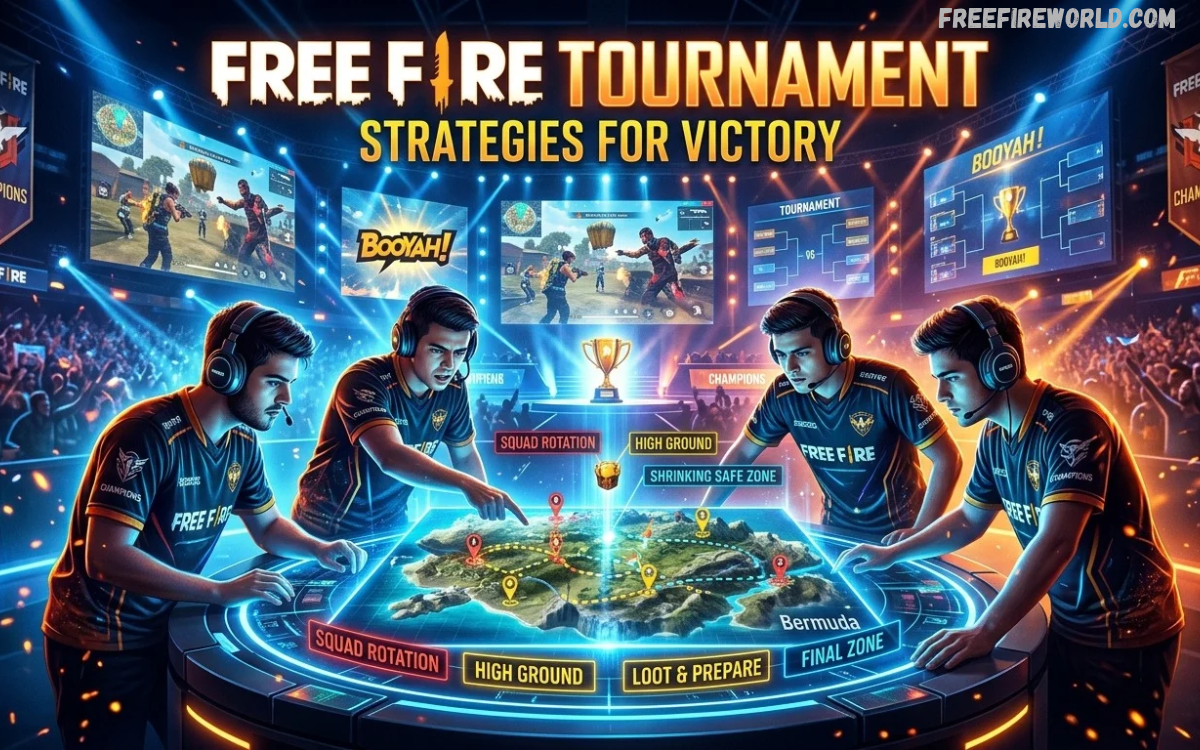
Free Fire tournaments demand skill, teamwork, quick decisions, and effective planning. Players must understand different match situations, manage resources, and coordinate with teammates to achieve consistent results.
Free Fire Tournament Strategies for Victory help players improve their competitive performance through smart positioning, communication, survival awareness, and tactical gameplay. A well-prepared squad can handle tough situations and compete with more confidence.
Understanding Free Fire Tournament Gameplay
Tournament gameplay differs from regular matches because every decision can affect the final result. Teams must balance eliminations, survival time, positioning, and resource management throughout each round.
Competitive matches also require players to understand tournament rules, scoring systems, and match objectives. Knowing how points are awarded helps squads develop strategies that support their overall performance.
Building a Strong Tournament Squad
A successful tournament squad needs players with different skills and responsibilities. Every teammate should understand their role, communicate effectively, and support the team’s overall strategy.
Squad selection should focus on teamwork, consistency, game awareness, and decision-making. Playing regularly with the same teammates helps develop trust and improves coordination during difficult encounters.
Choosing the Right Player Roles
Assigning specific responsibilities creates an organized squad. Roles such as team leader, support player, entry fragger, and sniper let teammates contribute in different ways.
Players should choose responsibilities based on their strengths and experience. Clear role distribution reduces confusion and helps the squad respond effectively during competitive situations.
Developing Effective Communication
Communication remains one of the most important tournament skills. Players should share enemy positions, available resources, movement plans, and important changes in the battlefield.
Short and accurate callouts help teammates understand situations quickly. Avoid unnecessary chatter during key encounters, because clear communication supports better coordination and decision-making.
Selecting the Best Landing Location
Landing location influences the squad’s early-game experience. Teams should consider available resources, nearby opponents, map positions, and possible movement routes before choosing a destination.
A familiar landing location can provide a strategic advantage because players understand its surroundings. Practicing different landing areas also prepares squads for situations where opponents contest their preferred locations.
Mastering Early-Game Strategies
The early game focuses on collecting equipment, understanding nearby threats, and preparing for upcoming rotations. Players should prioritize useful weapons, protective equipment, healing supplies, and ammunition.
Squads should avoid unnecessary confrontations before securing essential resources. A balanced start creates better survival opportunities and prepares teammates for more demanding stages of the tournament.
Choosing Weapons for Tournament Matches
Weapon selection should match individual skills and team requirements. Assault rifles, submachine guns, sniper rifles, and shotguns offer different advantages depending on distance and combat situations.
Players should practice with familiar weapons rather than constantly changing equipment. Consistent weapon handling improves accuracy, confidence, and overall combat performance during important tournament rounds.
Improving Aim and Accuracy
Accurate shooting helps players handle encounters more effectively. Regular practice with different weapon types improves crosshair placement, recoil control, reaction time, and target tracking.
Training should focus on consistency rather than random shooting. Players can use practice modes to understand weapon behavior and develop reliable aiming habits before competitive matches.
Mastering Movement Techniques
Movement plays an important role in competitive Free Fire gameplay. Players should understand jumping, crouching, strafing, sprinting, and changing positions to maintain awareness during encounters.
Good movement also helps players navigate different environments and avoid predictable patterns. Regularly practicing movement techniques creates smoother gameplay and improves overall control.
Understanding Map Awareness
Map awareness helps squads understand their surroundings and make informed decisions. Players should regularly check the minimap, watch for safe-zone changes, and communicate key location information.
Understanding buildings, open areas, elevated positions, and available cover supports better planning. Familiarity with different maps helps squads recognize useful locations and prepare for changing match conditions.
Mastering Safe-Zone Rotations
Safe-zone rotations are essential for tournament success. Teams should monitor zone movements and plan their next destination according to available routes, nearby opponents, and environmental conditions.
Early planning reduces unnecessary pressure during zone transitions. Squads should remain flexible because enemy positions and changing circumstances can affect their original movement plans.
Understanding Positioning Strategies
Positioning can influence the outcome of competitive encounters. Players should understand the advantages of cover, elevated terrain, buildings, and locations with clear surroundings.
A strong position provides better visibility and more opportunities for coordinated movement. Teams should also consider nearby escape routes and avoid locations that leave them exposed to multiple opponents.
Using Gloo Walls Effectively
Gloo Walls provide temporary protection and create opportunities for tactical movement. Players should practice placing them accurately and understand how defensive utility can support different match situations.
Squads should coordinate their use of defensive equipment instead of depending on one player. Proper timing and teamwork make these resources more useful during intense tournament encounters.
Managing Resources Efficiently
Resource management helps squads maintain performance throughout a match. Players should monitor ammunition, healing supplies, defensive equipment, and available utility items.
Sharing resources can improve team balance when a teammate needs additional supplies. Avoid carrying unnecessary equipment because organized inventories make it easier to prepare for changing situations.
Improving Close-Range Combat
Close-range encounters require quick reactions, accurate aiming, and controlled movement. Players should understand weapon ranges and choose equipment that matches their preferred combat style.
Team coordination matters as much in close encounters. Teammates should communicate enemy information and maintain awareness of their surroundings instead of making disconnected decisions.
Developing Long-Range Combat Skills
Long-range combat requires patience, accuracy, and careful target selection. Players should practice with suitable weapons and understand how distance affects their shooting performance.
Snipers and designated marksmen can support squads by observing distant positions and sharing information. Teams should coordinate these responsibilities to maintain awareness without losing focus on their main objectives.
Learning Defensive Tournament Strategies
Defensive gameplay focuses on protecting squad members, maintaining useful positions, and avoiding unnecessary risks. This approach helps teams preserve resources and stay competitive during challenging rounds.
Players should recognize when holding a position offers more value than pursuing opponents. Defensive decisions should always consider the safe zone, surrounding threats, and the squad’s available resources.
Understanding Aggressive Tournament Strategies
Aggressive strategies focus on creating opportunities through coordinated pressure and confident decisions. However, aggressive gameplay requires accurate information, suitable equipment, and strong communication.
Teams should evaluate each encounter before committing to a fight. Unplanned engagements can reduce squad resources and create disadvantages during later tournament stages.
Knowing When to Fight or Avoid Combat
Not every opponent encounter requires an immediate fight. Tournament teams should assess positioning, equipment, available resources, and potential third-party threats before deciding.
Avoiding unnecessary combat can preserve valuable resources and improve survival opportunities. A smart squad understands when an engagement supports its objectives and when repositioning offers greater value.
Mastering Third-Party Awareness
Third-party situations occur when another squad becomes involved in an ongoing encounter. Players should remain aware of surrounding activity and communicate information about nearby opponents.
Good awareness helps teams make informed decisions during chaotic situations. Squads should avoid losing track of their surroundings while focusing entirely on one opponent group.
Improving Team Coordination
Team coordination connects individual skills into a complete tournament strategy. Players should understand when to provide support, share resources, communicate threats, and follow agreed movement plans.
Regular squad practice helps teammates develop consistent decision-making habits. Reviewing previous matches can reveal communication issues and highlight areas for improvement.
Developing Leadership Skills
A team leader helps organize squad decisions and maintain communication. The leader should understand the match situation, collect information from teammates, and suggest suitable strategies.
Effective leadership also requires listening to other players. Teammates should share useful information because successful tournament decisions depend on collective awareness and cooperation.
Preparing for Final-Zone Situations
Final-zone situations require careful positioning and strong coordination. Remaining squads have limited space, making awareness, resource management, and decision-making especially important.
Players should understand available cover and clearly communicate movement plans. Maintaining composure helps teams respond to changing situations without making unnecessary decisions.
Practicing Tournament Strategies Regularly
Regular practice helps players develop consistent competitive habits. Training should include aiming, movement, communication, map awareness, resource management, and different squad responsibilities.
Custom matches and organized scrims provide opportunities to test strategies. Teams can experiment with different approaches and identify which tactics work best for their playing style.
Analyzing Previous Tournament Matches
Match analysis helps squads understand their strengths and weaknesses. Players should review important decisions, positioning mistakes, communication issues, and resource management throughout previous matches.
Discussing match performance creates opportunities for improvement. Teams should focus on practical lessons instead of blaming individual players for every unsuccessful result.
Understanding Tournament Scoring Systems
Tournament scoring systems can reward eliminations, placement, and other competitive achievements. Players should understand the official rules before participating in any event.
Different scoring formats may require different strategies. Some competitions reward consistent placement, while others encourage stronger elimination performance alongside survival.
Read Also: Free Fire New Features: Latest Updates, Gameplay Changes, and Exciting Improvements
Managing Pressure During Competitive Matches
Tournament pressure can influence concentration and decision-making. Players should develop routines that help them remain focused and communicate calmly during difficult moments.
Confidence comes from preparation and consistent practice. Squads that understand their strategies can respond more effectively when matches become challenging.
Optimizing Game Settings
Suitable game settings support comfortable and consistent gameplay. Players should adjust sensitivity, control layouts, graphics, and other available options according to their devices and preferences.
Settings should remain consistent during practice and tournaments. Frequent control changes can disrupt muscle memory and make it harder to maintain consistent performance.
Improving Device Performance
Stable device performance supports smoother competitive gameplay. Players should keep their devices updated, close unnecessary background applications, and maintain sufficient storage space.
A reliable internet connection also helps reduce interruptions. Teams should check their devices before tournament sessions to identify possible performance problems.
Understanding Tournament Rules
Every competitive event may have specific rules regarding match schedules, team registration, scoring, and player conduct. Participants should review official tournament information before joining.
Understanding these requirements helps squads avoid unnecessary complications. Players should also follow fair-play standards and respect tournament organizers’ decisions.
Avoiding Common Tournament Mistakes
Common mistakes include poor communication, unnecessary fights, weak positioning, and inefficient resource management. These problems can affect even experienced squads when players fail to follow their plans.
Teams should identify repeated mistakes through match reviews. Improving one weakness at a time creates a practical approach to developing stronger competitive habits.
Building Consistency Through Team Practice
Consistency is more valuable than relying on occasional outstanding performances. Squads should establish regular practice sessions and focus on communication, coordination, and strategic execution.
Players should also maintain realistic improvement goals. Tracking team performance over multiple matches helps identify progress and encourages better preparation.
Advanced Strategies for Competitive Squads
Advanced squads should focus on adapting strategies according to opponents and match conditions. Understanding enemy behavior, available resources, and safe-zone changes supports more informed decisions.
Flexibility is essential because no single strategy works in every situation. Teams should prepare multiple approaches and adjust their plans whenever match conditions change.
Creating a Winning Tournament Mindset
A winning mindset includes discipline, patience, confidence, and willingness to learn. Players should focus on executing their strategies rather than getting distracted by individual results.
Respectful teamwork also creates a healthier competitive environment. Supporting teammates after difficult rounds helps maintain motivation and encourages continuous improvement.
Best Free Fire Tournament Strategies for Victory
The most effective tournament approach combines preparation, communication, positioning, and teamwork. Every squad member should understand their responsibilities and contribute to the team’s shared objectives.
Players should balance aggressive opportunities with careful decisions. Strong preparation, consistent practice, and flexible strategies can help squads improve their tournament performance over time.
Frequently Asked Questions
What are the best Free Fire tournament strategies?
The best strategies include effective communication, smart positioning, safe-zone rotations, resource management, and coordinated teamwork. Players should adapt their approach according to match conditions.
How can beginners prepare for Free Fire tournaments?
Beginners should practice aiming, movement, map awareness, and communication. Learning tournament rules and playing organized squad matches can also improve competitive understanding.
Why is teamwork important in Free Fire tournaments?
Teamwork helps players share information, coordinate movement, and support one another. A well-organized squad can make better decisions during challenging encounters.
Which weapons are suitable for tournament matches?
Assault rifles, shotguns, submachine guns, and sniper rifles serve different purposes. The best selection depends on player experience, preferred combat distance, and team strategy.
How can players improve their tournament aim?
Players can improve aim through regular training, crosshair placement, recoil control, and weapon familiarity. Consistent practice helps develop more reliable shooting habits.
Why are safe-zone rotations important?
Safe-zone rotations help squads reach suitable positions while managing available time and resources. Early planning can reduce pressure during zone transitions.
How can squads improve communication?
Squads should use short callouts, share enemy positions, and communicate movement plans. Regular practice with the same teammates also improves coordination.
Should tournament players choose aggressive or defensive gameplay?
Both approaches can be useful depending on match conditions. Teams should evaluate their resources, positioning, and objectives before choosing an approach.
How can players perform better during final zones?
Players should maintain awareness, manage resources, communicate clearly, and understand available cover. Careful decisions become increasingly important as the playable area changes.
How often should tournament squads practice?
Regular practice helps develop consistent teamwork and competitive skills. Organized sessions, custom matches, and match reviews can help squads identify opportunities to improve.
Conclusion
Free Fire tournaments require more than accurate shooting and quick reactions. Successful squads develop communication, map awareness, resource management, positioning, and teamwork through regular preparation.
Free Fire Tournament Strategies for Victory provide a useful foundation for competitive improvement. By practicing these techniques, analyzing previous matches, and adapting to different situations, players can build stronger squads and pursue better tournament results.
