

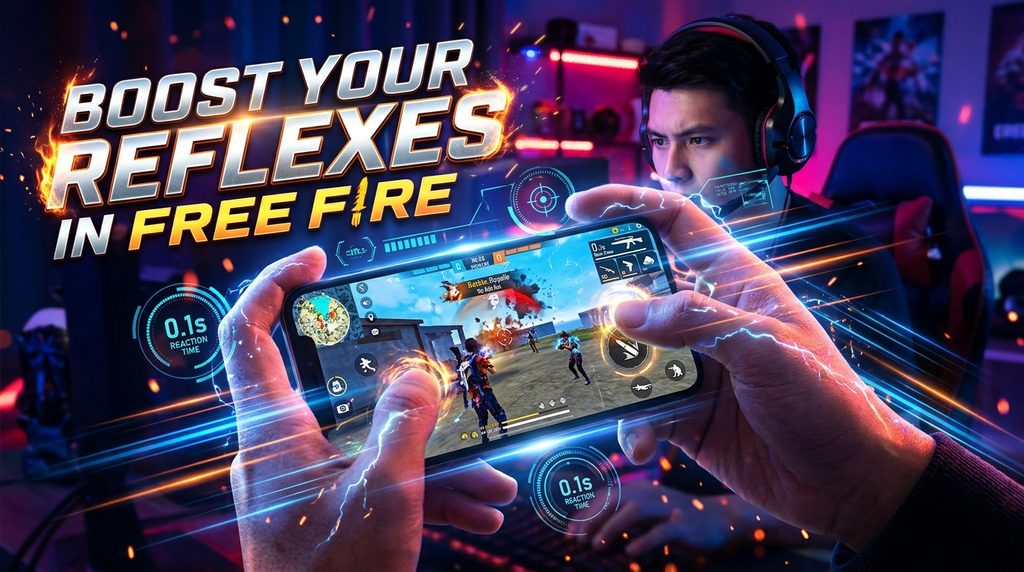
Fast reflexes play an important role in Free Fire, especially during close-range battles, sudden enemy encounters, and intense final-zone situations. Players with quick reactions can respond to threats, adjust their aim, and make better decisions during combat.
Learning how to Boost Your Reflexes in Free Fire requires consistent practice, comfortable controls, and proper gameplay habits. This guide explains practical techniques, training methods, and settings that can help improve reaction speed and overall performance.
Why Reflexes Matter in Free Fire
Reflexes determine how quickly players respond to unexpected situations during matches. A faster response helps players spot enemy movement, adjust crosshair placement, switch weapons, and react to incoming attacks.
Free Fire includes different combat situations that require quick decisions. Close-range fights demand fast aiming, while long-range encounters require patience, accuracy, and proper target tracking.
Understand Reaction Time in Free Fire
Reaction time refers to the period between noticing an event and responding to it. In Free Fire, this includes recognizing enemy movement, identifying danger, and taking the right action.
Good reaction time comes from practice and familiarity with game mechanics. Players gradually develop better responses by repeating common situations and learning how different weapons, movements, and abilities work.
Improve Your Free Fire Sensitivity Settings
Sensitivity settings influence how quickly the camera and crosshair respond to finger movements. Comfortable sensitivity makes it easier to track enemies, control aim, and adjust the crosshair during different combat situations.
Avoid copying another player’s sensitivity without testing it. Every device, screen size, and playing style can feel different, so gradual adjustments are more useful than constantly changing settings.
Find the Right General Sensitivity
General sensitivity controls camera movement and quick direction changes. A comfortable setting helps players look around, locate opponents, and adjust their view without unnecessary movements.
Test your settings inside the training area before entering competitive matches. Make small adjustments until camera movement feels predictable and easy to control.
Adjust Red Dot Sensitivity
Red Dot sensitivity affects aiming when using a red dot sight. Proper adjustment can help maintain crosshair control during medium-range encounters and improve target tracking.
Practice following moving targets while keeping your aim steady. Focus on smooth movements rather than making sudden adjustments that move the crosshair away from the opponent.
Practice Scope Sensitivity
Scope sensitivity affects aiming through different magnification levels. Players need controlled movements when tracking opponents at longer distances because excessive sensitivity can make accurate aiming difficult.
Test each available scope separately. Spend time understanding how different sensitivity levels affect your aim before selecting settings for regular matches.
Customize Your HUD Layout
A comfortable HUD layout helps players perform actions quickly without searching for buttons. Keep important controls accessible, especially during intense fights where every movement matters.
Arrange your fire, jump, crouch, movement, and weapon-switch buttons according to your playing style. Avoid placing frequently used controls too close together because accidental touches can interrupt gameplay.
Learn the Claw Control Technique
Claw controls allow players to use multiple fingers for different actions. This setup can make aiming, jumping, crouching, and shooting easier to manage at the same time.
However, switching to claw controls requires patience and gradual practice. Begin with a comfortable layout, learn basic finger movements, and increase complexity only when you feel confident.
Practice Aim Training Regularly
Aim training is one of the most effective ways to develop better reactions in Free Fire. Regular practice helps players recognize targets, move their crosshair accurately, and respond quickly to changing situations.
Spend time shooting stationary and moving targets in the training area. Focus on accuracy first, then gradually improve your response speed through repeated exercises.
Improve Crosshair Placement
Crosshair placement means keeping your aim in a useful position before an enemy appears. Proper placement reduces unnecessary camera movement and helps players respond more efficiently during unexpected encounters.
Keep your crosshair near common enemy positions instead of pointing toward the ground. This simple habit can make target acquisition easier during close-range and medium-range battles.
Develop Better Drag Headshot Control
Drag headshots require controlled finger movements and accurate crosshair positioning. Players move their aim upward while firing to adjust the targeting position during combat.
Practice this technique with different weapon categories in the training area. Don’t focus only on speed; controlled movement and consistent accuracy matter just as much.
Improve Close-Range Reaction Speed
Close-range encounters often develop quickly because opponents can move around the player from different directions. These situations require awareness, movement control, and quick decisions.
Practice tracking nearby targets while maintaining a comfortable distance. Learn to recognize enemy movement patterns and use available cover to create better opportunities for accurate shots.
Master Movement and Camera Control
Movement skills help players avoid predictable positioning during combat. Smooth camera control also makes it easier to follow opponents while changing direction or moving between defensive positions.
Practice combining walking, jumping, crouching, and camera adjustments. The goal is to make these actions feel natural without losing control of your aim.
Practice Gloo Wall Placement
Gloo walls provide temporary cover during dangerous situations. Learning to place them comfortably can help players respond to threats and create safer positions during combat.
Practice selecting the gloo wall quickly and placing it in useful locations. Develop a consistent control routine so defensive actions become easier to perform under pressure.
Improve Enemy Detection Skills
Recognizing enemy positions early can buy valuable time to make decisions. Pay attention to movement, nearby sounds, visual indicators, and changes in the surrounding environment.
Avoid focusing on one direction for too long. Regularly scan your surroundings and use available information to anticipate where threats may appear.
Learn to Use Headphones Effectively
Audio awareness is an important part of Free Fire gameplay. Footsteps, gunfire, vehicle sounds, and other audio cues can reveal nearby activity.
Use comfortable headphones and suitable audio settings to understand the game environment. Avoid excessively high volume levels, and focus on recognizing useful sound patterns during matches.
Understand Weapon Switching
Weapon switching matters when combat situations change quickly. Choosing the right weapon helps players respond to different distances and enemy movements.
Practice switching between your primary and secondary weapons in the training area. Learn where your weapon controls are and avoid unnecessary button presses during important encounters.
Choose Weapons According to Your Playing Style
Different weapons offer different handling characteristics, firing patterns, and combat advantages. Understanding these differences can help players make better decisions during matches.
Experiment with suitable weapon categories and learn when each shines. Regular practice with a smaller selection of familiar weapons can improve consistency and reduce confusion.
Improve Your Decision-Making Speed
Fast reflexes are not limited to physical finger movements. Good decision-making also matters because players must quickly evaluate situations and select suitable actions.
Practice recognizing when to attack, reposition, reload, or use cover. Avoid rushing into every encounter because unnecessary aggression can create difficult situations.
Learn From Previous Matches
Reviewing gameplay mistakes helps players identify areas that need improvement. You may notice delayed reactions, poor crosshair placement, unnecessary movement, or incorrect positioning.
Instead of repeating the same mistakes, focus on one improvement at a time. Small corrections across multiple matches can gradually improve your overall performance.
Play Training Matches Before Ranked Games
Training matches let you practice mechanics without focusing entirely on competitive results. They help players become comfortable with controls and improve their understanding of different combat situations.
Use these matches to warm up your aim, movement, and reaction skills. Once your controls feel comfortable, you can apply the same techniques during ranked matches.
Avoid Changing Settings Too Frequently
Constantly changing sensitivity, HUD layouts, and control positions can make gameplay inconsistent. Players need time to get used to their chosen settings.
Select comfortable settings and use them consistently for a reasonable period. Change individual options only when you identify a specific problem that affects your control.
Maintain Proper Device Performance
Device performance can influence how smoothly Free Fire responds to player input. Unnecessary background applications, limited storage, and unstable connections may affect the overall experience.
Close unnecessary applications before playing and keep your game updated. Choose graphics settings that allow your device to maintain stable performance during matches.
Understand the Importance of Stable FPS
Stable frame rates can make camera movement and gameplay feel more consistent. Sudden performance drops may interrupt aiming, movement, and other actions during important encounters.
Choose graphics options based on your device’s capabilities. Prioritize smooth performance over visual effects when your device struggles with demanding settings.
Improve Internet Connection Stability
A stable internet connection helps keep communication consistent between your device and game servers. Connection interruptions can make movement and combat responses feel delayed.
Use a reliable network whenever possible and avoid unnecessary downloads during matches. Remember that internet latency and personal reaction time are different factors.
Read Also: Free Fire Code Creator: How to Generate Codes in 2026
Develop Better Situational Awareness
Situational awareness means understanding your surroundings and recognizing important gameplay information. Players should monitor the minimap, safe-zone movement, nearby enemies, and available cover.
Build the habit of checking key information without losing focus during combat. Better awareness can help you prepare for encounters instead of reacting after a threat becomes obvious.
Learn Common Enemy Movement Patterns
Many players use familiar movement techniques during combat, including jumping, crouching, strafing, and changing direction. Recognizing these patterns can help you anticipate possible actions.
Observe how opponents move instead of automatically following their position. Predictable movements become easier to understand when you practice tracking different targets.
Improve Your Reaction During Squad Battles
Squad matches require players to respond to multiple situations while coordinating with teammates. Communication and awareness matter most when enemies attack from different directions.
Stay aware of teammate positions and share useful information about enemy locations. Coordinated decisions can create better opportunities than reacting independently to every situation.
Practice Under Different Combat Conditions
Free Fire matches include open areas, buildings, narrow spaces, and varied terrain. Each environment requires different movement and aiming decisions.
Practice recognizing suitable positions in different locations. Understanding how surroundings affect visibility and movement can help you respond more confidently during unexpected encounters.
Build Consistency Through Daily Practice
Consistent practice is more useful than long sessions without a clear objective. Short training sessions focused on specific skills can make improvement easier to track.
Create a simple routine that includes aiming, movement, camera control, and weapon practice. Repeat the exercises regularly and increase difficulty as your control becomes more comfortable.
Follow a Simple Daily Reflex Training Routine
A structured routine helps players focus on different gameplay skills without becoming overwhelmed. Divide practice into short sessions that target specific areas of performance.
Start with camera movement, continue with target tracking, and finish with movement combinations. Take regular breaks, and adjust practice time to your comfort and schedule.
Common Mistakes That Reduce Reaction Performance
Some players focus entirely on shooting speed while ignoring positioning, awareness, and accuracy. Others constantly change settings or attempt advanced techniques before learning basic controls.
Avoid these habits by developing fundamental skills first. Comfortable controls, consistent practice, and thoughtful decisions provide a better foundation for long-term improvement.
Avoid Rushing Every Enemy Encounter
Aggressive gameplay can create exciting situations, but rushing without understanding the surroundings may lead to unnecessary mistakes. Players should evaluate enemy positions before choosing their next action.
Use cover, observe movement, and consider available resources. A well-planned response is often more effective than making rushed decisions during combat.
Maintain Focus During Long Gaming Sessions
Concentration can drop when players play without breaks. Tiredness may affect attention, decision-making, and the ability to recognize important gameplay information.
Take regular breaks and maintain a comfortable gaming environment. Balanced practice helps players remain focused without turning training into an exhausting activity.
How Beginners Can Boost Their Reflexes in Free Fire
Beginners should start by learning basic movement, aiming, camera control, and weapon handling. These fundamentals build a strong foundation for faster responses during matches.
Avoid copying advanced techniques before understanding the controls. Practice simple exercises regularly, then gradually introduce more challenging movements as your confidence grows.
Advanced Tips for Experienced Free Fire Players
Experienced players can focus on improving crosshair placement, movement combinations, target tracking, and decision-making. These skills help make gameplay more consistent across different combat situations.
Analyze your matches and identify specific weaknesses. Working on individual problems can yield better results than trying to improve every skill at once.
Best Ways to Measure Your Progress
Tracking performance helps players understand whether their training methods are useful. Observe improvements in aim consistency, target recognition, movement control, and decision-making.
Do not judge progress through individual match results alone. Look for consistent improvements across multiple matches and focus on developing reliable gameplay habits.
Create a Comfortable Gaming Environment
A comfortable gaming environment supports better concentration and control. Keep your device at a suitable viewing distance and use a relaxed hand position during gameplay.
Avoid unnecessary distractions while practicing. A comfortable setup makes it easier to focus on aiming, movement, and other important gameplay mechanics.
Why Patience Is Important for Better Reflexes
Developing faster responses requires repetition and familiarity with common gameplay situations. Players may not notice immediate changes, but consistent practice can gradually improve control and confidence.
Set realistic goals and celebrate small improvements. Focus on learning from mistakes instead of expecting perfect performance in every match.
Frequently Asked Questions
How can I Boost Your Reflexes in Free Fire?
Practice aiming, target tracking, movement control, and camera adjustments regularly. Comfortable sensitivity settings and consistent training can help develop better responses during matches.
Which sensitivity is best for faster reflexes in Free Fire?
No universal sensitivity setting works for every player. Choose settings that feel comfortable on your device and adjust them gradually after testing.
Does HUD layout affect reaction speed?
Yes. A comfortable HUD layout makes important controls easier to access. Proper button placement can reduce unnecessary finger movement during combat.
How can beginners improve their reaction time?
Beginners should practice basic aiming, camera movement, and target recognition. Learning controls gradually can make gameplay feel more natural and predictable.
Is training mode useful for improving reflexes?
Yes. Training mode provides a convenient environment to practice aim, weapon handling, and movement techniques without focusing entirely on match results.
How important is crosshair placement?
Crosshair placement helps reduce unnecessary aiming adjustments. Keeping your crosshair near common enemy positions can make target acquisition easier.
Can headphones improve Free Fire gameplay?
Headphones can help players hear important audio cues, including footsteps and gunfire. Better audio awareness may support faster decisions during matches.
Does sensitivity improve headshot accuracy?
Sensitivity can influence aiming control, but accuracy also depends on crosshair placement, finger movement, and regular practice.
How can I improve close-range fights?
Practice target tracking, movement control, and comfortable weapon switching. Understanding enemy movement can also help you respond more effectively.
How long does it take to improve reflexes in Free Fire?
Improvement depends on individual experience, practice consistency, and familiarity with controls. Regular training and reviewing gameplay mistakes can support gradual progress.
Conclusion
Learning how to Boost Your Reflexes in Free Fire involves more than increasing sensitivity or shooting faster. Better aim, comfortable controls, movement skills, situational awareness, and consistent practice all contribute to improved gameplay.
Start with basic exercises, maintain suitable settings, and gradually improve your reaction techniques. With patience and regular training, you can develop better control, make smarter decisions, and enjoy a more consistent Free Fire experience.
