
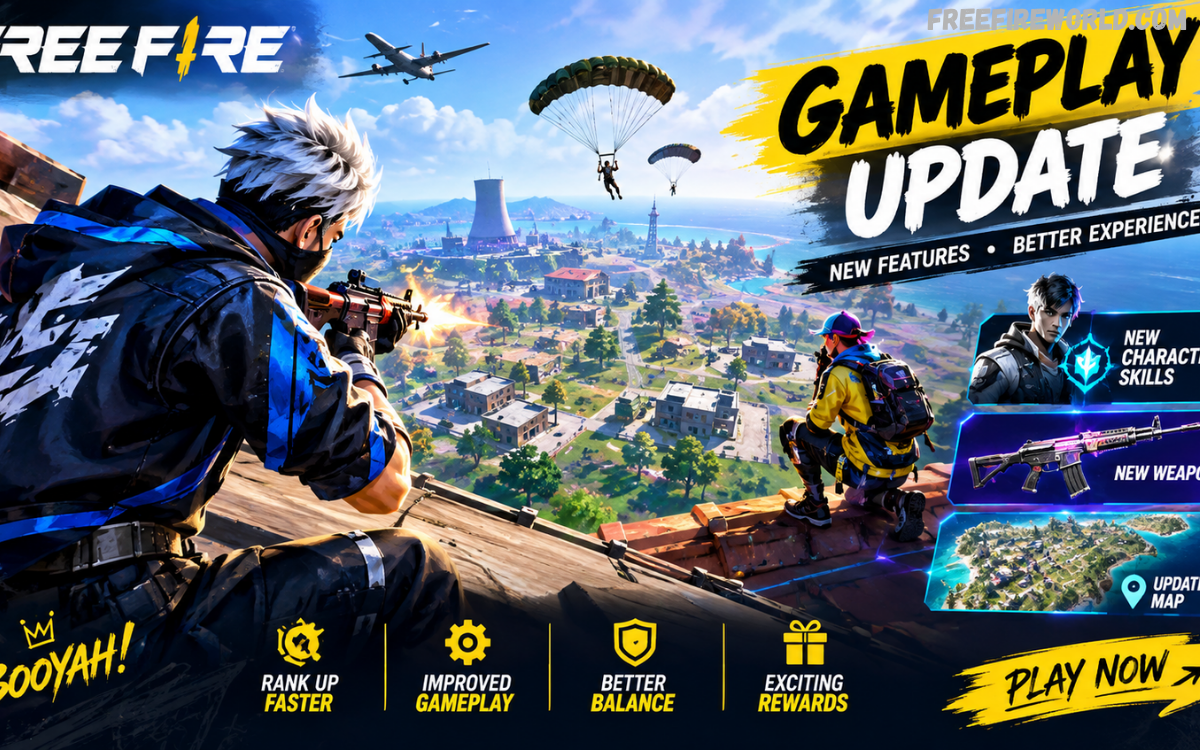
The Free Fire gameplay update introduces changes designed to refresh the overall playing experience. Gameplay updates can affect combat, movement, controls, maps, characters, weapons, game modes, and performance. These changes can also influence how players approach matches and adjust their strategies.
For regular players, understanding an update before entering competitive matches can make the transition easier. Even small adjustments to weapon balance, movement, or character abilities may change familiar gameplay patterns.
What Is a Free Fire Gameplay Update?
A Free Fire gameplay update refers to changes that modify how the game works during matches. Unlike updates focused mainly on visual content, gameplay updates can directly affect player movement, combat mechanics, abilities, weapons, controls, matchmaking, and other systems used during gameplay.
Garena can introduce gameplay changes through major patches, seasonal updates, events, or smaller improvements. The exact features can vary between updates, regions, and game versions. Players should therefore check official patch notes whenever a new update becomes available.
Why Gameplay Updates Matter?
Gameplay updates help keep a battle royale game dynamic by changing existing mechanics and introducing new ways to play. Without regular gameplay improvements, long-term players could become accustomed to the same strategies, weapon combinations, and match routines.
A major Free Fire gameplay update can also encourage players to experiment. A weapon adjustment may change preferred loadouts, while a character adjustment may affect team composition. Map changes can also create new routes, defensive positions, and opportunities during matches.
Changes to Combat Mechanics
Combat mechanics are among the most important areas affected by gameplay updates. Developers may adjust weapon damage, recoil, range, firing behavior, reload speed, or other characteristics. These adjustments can change how players engage opponents at different distances.
Players should spend time testing combat changes after an update rather than immediately relying on previous habits. A weapon that performed well before a patch may require a different approach afterward. Training areas and casual matches can provide useful opportunities to understand new combat behavior.
Weapon Balance Improvements
Weapon balancing is a common part of gameplay development. Developers can make adjustments to individual weapons when certain options become too dominant or underused. The goal can be to create more meaningful choices when players select their equipment.
After a Free Fire gameplay update, players should compare familiar weapons with alternative options. Damage, range, accuracy, magazine capacity, and handling can all influence weapon selection. Learning these differences can help players create loadouts suited to different combat situations.
Movement and Mobility Changes
Movement has a major role in Free Fire because players frequently need to reposition during combat. Gameplay improvements may affect movement speed, jumping behavior, crouching, sliding, climbing, or other mobility mechanics depending on the update.
Changes to movement can require players to adjust their muscle memory. Techniques that previously felt natural may work differently after a patch. Practicing movement in a controlled environment can help players become comfortable with new mechanics before entering higher-pressure matches.
Character Ability Adjustments
Characters can significantly influence Free Fire gameplay because their abilities may provide offensive, defensive, or utility advantages. A gameplay update can modify ability effects, cooldowns, duration, or other characteristics to improve overall balance.
When character abilities change, players should reconsider their preferred combinations. An ability that worked well for aggressive gameplay may become more suitable for another situation after an adjustment. Team players can also coordinate character choices around updated abilities.
New Gameplay Features
A major update can introduce new gameplay features that change how players interact with matches. These features may include revised mechanics, new systems, improved interfaces, additional tactical options, or changes to existing gameplay elements.
New features often require an adjustment period. Players should explore them carefully instead of assuming that previous strategies will work exactly the same way. Understanding a new system early can make future matches easier to manage.
Changes to Game Modes
Free Fire includes different modes that provide varying gameplay experiences. An update may introduce a new mode, modify an existing mode, or change rules and objectives. Each mode can require a different approach to combat, positioning, and resource management.
Players should read the rules associated with newly updated modes before playing. Some modes may reward aggressive play, while others can emphasize survival, objectives, teamwork, or tactical positioning. Understanding the objective is essential for making effective decisions.
Battle Royale Gameplay Improvements
Battle royale matches require players to balance exploration, combat, survival, and positioning. A gameplay update can influence these elements through changes to maps, loot, weapons, zones, vehicles, or other match mechanics.
After an update, players should explore familiar areas again because item locations, tactical routes, or combat opportunities may have changed. Early-game decisions can become especially important when the update introduces new equipment or changes the availability of existing resources.
Map and Environment Changes
Maps are closely connected to gameplay because buildings, terrain, open spaces, and cover determine how players move and fight. Developers may change selected areas to improve match flow or introduce new gameplay possibilities.
A map adjustment can create new strategic routes. Players may discover better defensive positions, alternative rotations, or different approaches to popular locations. Learning these changes can be particularly useful for players who regularly land in the same areas.
Loot System Adjustments
Loot availability can directly affect the opening minutes of a match. Gameplay updates may modify the availability, distribution, or behavior of weapons and equipment. These changes can influence where players choose to land and how quickly they prepare for combat.
Players should avoid depending completely on previous loot patterns. If a familiar landing location provides different equipment after an update, adapting quickly becomes important. Checking several nearby locations can help players maintain flexibility during the early game.
Performance and Optimization
Performance improvements are another important part of gameplay updates. Developers may optimize game resources, reduce technical issues, improve stability, or make adjustments that help the game run more consistently on supported devices.
Better performance can make gameplay feel smoother, particularly during fast combat situations. Players experiencing lag or frame-rate problems should also review their device settings and available storage. Keeping the game and device software updated can help maintain a stable experience.
Graphics and Visual Improvements
Visual improvements can make environments, effects, animations, and interfaces clearer. However, graphics changes can also affect device performance depending on hardware capabilities and selected settings.
Players using lower-end devices may need to balance visual quality with performance. A smoother frame rate can be more useful during competitive gameplay than maximum graphical settings. Testing different configurations after an update can help players find a comfortable setup.
Control Settings After an Update
Control settings are an important part of Free Fire gameplay. Changes to mechanics can make existing sensitivity, button layouts, or control preferences feel different. Players should review their settings after installing a major update.
Instead of changing every setting at once, players can make small adjustments and test them individually. This approach makes it easier to identify which configuration feels comfortable. Keeping a familiar control layout can also reduce unnecessary confusion after an update.
Sensitivity and Aim Adjustments
Aim sensitivity affects how quickly the camera and crosshair respond to player input. Gameplay changes can sometimes make an existing sensitivity setup feel different, particularly when weapon behavior or movement mechanics are adjusted.
Players should test sensitivity gradually rather than copying another player’s settings without considering their own device and playstyle. A setup that feels comfortable for one player may not produce the same results for another. Consistent practice is more important than constantly changing settings.
Team Gameplay Changes
Team-based matches require communication and coordination. When character abilities, weapons, or movement mechanics change, team strategies may need to change as well. Players should discuss updated roles and equipment combinations before entering serious matches.
A balanced team can combine different strengths, such as support, defense, mobility, and offensive pressure. The best combination depends on the current mechanics and the team’s preferred playstyle. Regular communication can help teammates respond quickly when situations change.
Ranked Match Gameplay
Ranked matches require careful decision-making because players are competing within a structured progression system. Gameplay changes can influence how players approach early fights, rotations, resource collection, and final-zone engagements.
After a significant Free Fire gameplay update, players may benefit from spending some time in less competitive modes. This allows them to learn updated weapons, abilities, movement, and map changes before relying on those mechanics in ranked matches.
How Updates Affect Strategy
A gameplay update can make previously successful strategies less effective. For example, a weapon adjustment may encourage players to use different equipment, while a map change may create new rotation routes. Strategic flexibility is therefore an important skill after every major patch.
Players should focus on understanding why a strategy works rather than memorizing a fixed routine. When game mechanics change, flexible players can adjust their decisions based on the current situation instead of relying entirely on previous experiences.
Close-Range Combat After Updates
Close-range fights often require fast movement, accurate aiming, and effective positioning. Changes to weapons or movement can significantly influence these encounters. Players should test close-range weapons and mechanics after a gameplay update.
Cover becomes particularly important during close combat. Players can use buildings, objects, terrain, and other available protection to reduce exposure. Combining movement with accurate positioning can help players respond to opponents without depending on a single weapon or technique.
Long-Range Combat Adjustments
Long-range combat depends on accuracy, visibility, weapon characteristics, and positioning. When weapon damage, recoil, or range changes, long-distance strategies may need to be adjusted accordingly.
Players should avoid exposing themselves unnecessarily while engaging opponents from a distance. Using cover and changing positions after firing can make engagements more controlled. Understanding the updated behavior of long-range weapons can also improve equipment selection.
Vehicle and Rotation Changes
Vehicles can help players travel across large areas quickly. If an update changes vehicle behavior, availability, or map layouts, rotation strategies may also change. Players should learn the safest routes between important locations.
Rotating early can help players avoid unnecessary pressure when the safe zone changes. However, the best timing depends on the situation, available resources, and nearby opponents. Players should monitor the zone while maintaining awareness of potential threats.
Safe Zone Strategy
The safe zone is a central part of battle royale gameplay. Players must balance movement toward safety with the need to collect resources and avoid unnecessary engagements. Gameplay updates can change how quickly or effectively players make these decisions.
Players should monitor the zone regularly rather than waiting until the final moment. Planning rotations early can provide more options and reduce rushed decisions. Positioning near useful cover can also become important when multiple teams approach the same area.
Read Also: Free Fire Rank Update: Latest Ranking Changes, Rewards, and Tips
How Beginners Can Adapt
New players should focus on understanding the core gameplay rather than trying to master every new feature immediately. After an update, beginners can start with casual matches, learn basic controls, and gradually explore new weapons and abilities.
It is useful to change one aspect of gameplay at a time. A beginner can first learn movement, then experiment with weapons, and later explore character abilities and advanced positioning. This gradual approach makes new mechanics easier to understand.
How Experienced Players Can Adapt
Experienced players often have established habits, which can make major changes noticeable. After a Free Fire gameplay update, experienced players should identify which familiar mechanics have changed and test them deliberately.
Reviewing patch information, practicing updated mechanics, and playing several matches can reveal differences that may not be obvious immediately. Experienced players can then adjust their loadouts, rotations, controls, and team strategies according to the current game environment.
Common Mistakes After a Gameplay Update
One common mistake is assuming that everything works exactly as it did before the update. Players may continue using outdated strategies without testing whether weapon behavior, abilities, movement, or map layouts have changed.
Another mistake is changing too many settings at once. Constantly modifying sensitivity, controls, weapons, and characters can make it difficult to understand what actually improves gameplay. A more structured approach is to test changes individually and keep the settings that provide consistent results.
Free Fire Gameplay Update and Player Experience
Gameplay updates can make Free Fire feel different even when the basic battle royale structure remains familiar. New mechanics, balance adjustments, performance improvements, and gameplay features can provide players with fresh experiences.
Updates also create opportunities for players to discover new strategies. Instead of viewing every change as a disruption, players can treat a new patch as a chance to explore different weapons, characters, routes, and tactical approaches.
How to Stay Updated
Players should use reliable sources when checking information about Free Fire updates. Official patch notes and announcements are generally the most useful sources for understanding confirmed gameplay changes and feature availability.
Community discussions can provide additional gameplay experiences, but unofficial information should be checked against official announcements before being treated as confirmed. This is particularly important when information about release dates, abilities, weapons, or upcoming features begins circulating online.
Preparing Before Installing an Update
Before installing a major update, players should make sure their device has enough free storage and a stable internet connection. Large game updates can require additional space during installation, so checking available storage beforehand can prevent interruptions.
Players can also record their preferred control and sensitivity settings if they have a setup they want to preserve. After the update, they can compare the settings and make adjustments only when necessary. This preparation can make the transition smoother.
Free Fire Gameplay Update Tips
The first useful tip is to test new mechanics before relying on them in important matches. Training areas and casual modes provide a lower-pressure environment where players can understand changes to weapons, movement, characters, and controls.
The second tip is to remain flexible. A Free Fire gameplay update can change the value of familiar strategies, so players should be prepared to experiment. Watching how matches develop and adjusting decisions based on the current situation can be more effective than following a fixed routine.
Future Gameplay Improvements
Free Fire can continue evolving through new mechanics, balance changes, seasonal content, technical improvements, and gameplay adjustments. The exact direction of future updates depends on developer plans and official announcements.
Players should avoid relying on unconfirmed information about future features. Confirmed patch notes and official announcements provide a clearer picture of what has actually changed. Staying informed allows players to prepare without confusing rumors with released gameplay features.
Frequently Asked Questions
What is a Free Fire gameplay update?
A Free Fire gameplay update introduces changes to game mechanics, weapons, characters, movement, maps, controls, modes, or performance. These changes can affect how players approach matches.
How often does Free Fire receive gameplay updates?
Free Fire receives updates periodically, with larger updates commonly introducing gameplay adjustments alongside new content. The timing and features vary depending on the official release schedule.
Do gameplay updates change weapon performance?
Yes. Gameplay updates can adjust weapon damage, recoil, range, accuracy, reload speed, or other characteristics. Players should review confirmed patch information after major updates.
Can a gameplay update change character abilities?
Yes. Character abilities may receive balance adjustments, including changes to effects, duration, cooldowns, or other mechanics. Such changes can affect character selection and team strategies.
Do Free Fire updates improve game performance?
Some updates include optimization and stability improvements. Performance can also depend on the player’s device, graphics settings, available storage, and network conditions.
Should I change my sensitivity after an update?
Not necessarily. If aiming or movement feels different after an update, players can test their existing settings and make gradual adjustments rather than changing everything immediately.
Can gameplay updates change Free Fire maps?
Yes. Updates can introduce new locations, modify existing areas, or change map elements. These changes may create different routes, cover positions, and landing strategies.
How can I learn new gameplay mechanics?
Training areas and casual matches are useful for testing new weapons, movement mechanics, abilities, and controls. Practicing before competitive matches can make new features easier to understand.
Where can I find confirmed Free Fire gameplay update information?
Official Free Fire announcements and patch notes are the most reliable sources for confirmed gameplay changes. Unofficial information should be checked against official sources before relying on it.
Can a Free Fire gameplay update affect ranked matches?
Yes. Changes to weapons, characters, movement, maps, and other mechanics can influence ranked-match strategies. Players may want to practice updated mechanics before returning to competitive matches.
Conclusion
The Free Fire gameplay update can influence many parts of the playing experience, including weapons, movement, characters, maps, game modes, controls, performance, and strategy. Understanding these changes helps players transition from older gameplay habits to the mechanics available in the current version.
Players can adapt effectively by reviewing confirmed update information, testing new mechanics, adjusting strategies gradually, and practicing before entering competitive matches. Whether you are a beginner or an experienced player, learning how gameplay changes work can help you make more informed decisions during every match.
