
Building a powerful team is one of the most important parts of progressing in Whiteout Survival. Heroes influence battle performance, troop strength, defensive capabilities, and success in different game modes. Early on, players can access Generation 1 and Generation 2 heroes, each with unique abilities and advantages.
Whiteout Survival: Best Gen 1–2 Heroes and Lineup Strategies explores the strongest early-generation heroes, their combat roles, recommended combinations, and practical ways to improve team performance. Whether you play as a free-to-play user, a low spender, or a competitive player, understanding hero abilities and lineup mechanics can help you maximize your resources.
Understanding Hero Generations in Whiteout Survival
Hero generations represent groups of characters introduced as a server progresses. Each new generation generally brings stronger heroes, different abilities, and more lineup options. Generation 1 heroes establish the foundation of an early account, while Generation 2 introduces important upgrades for infantry, lancer, and sharpshooter roles.
The timing of new generations depends on server progression. Generation 2 usually becomes available during early server development, often around day 40, though exact schedules can vary. Players should understand their server’s current stage before spending valuable resources because the best investment strategy changes as new heroes become available.
Generation 1 Heroes: Building Your First Strong Team
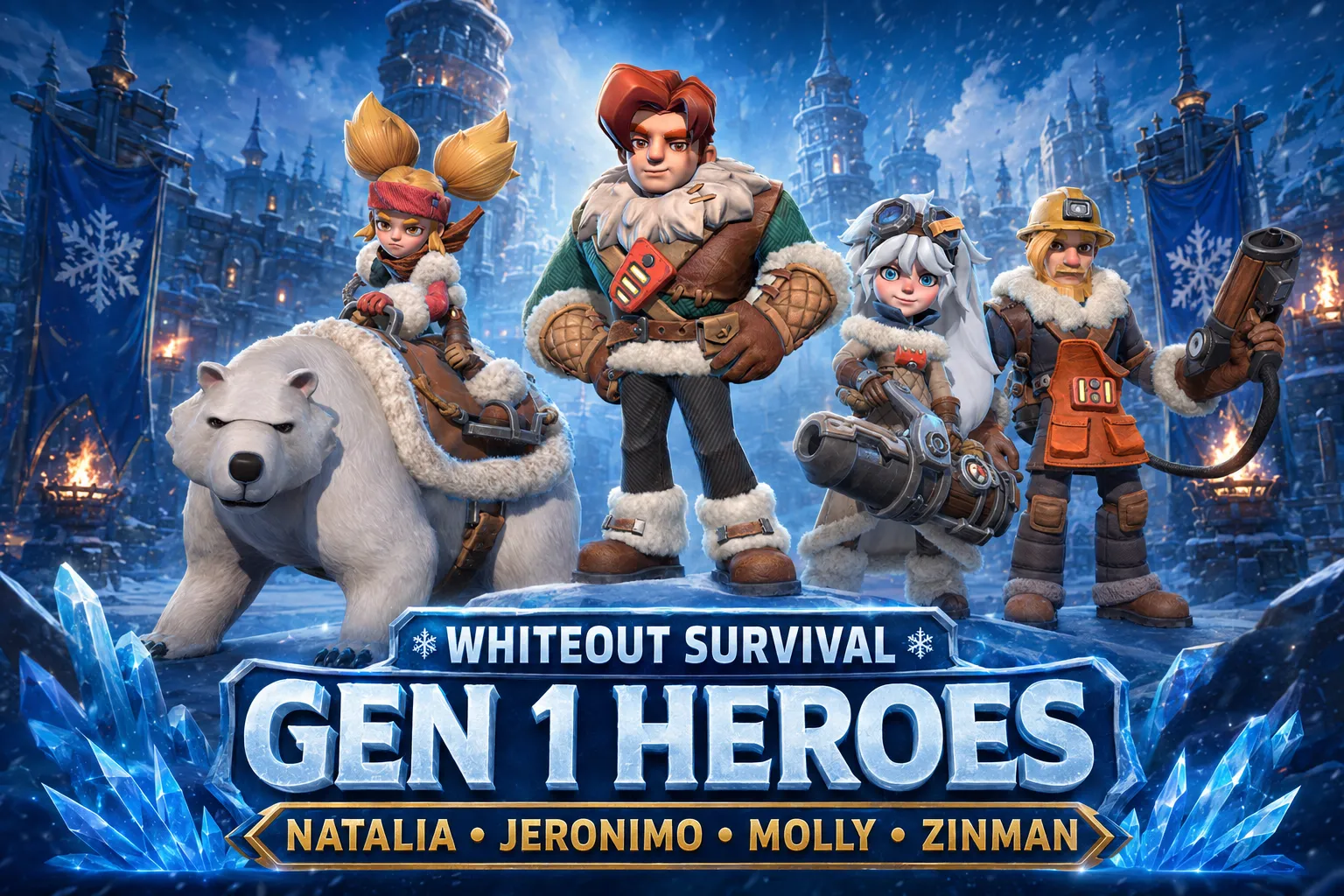
Generation 1 includes several important heroes that help beginners develop their first effective battle formations. Characters such as Sergey, Natalia, Molly, Bahiti, Gina, and Zinman provide different combinations of durability, damage, and utility. Some are easier to develop through regular gameplay, while others may require additional spending or special recruitment opportunities.
For new accounts, focus on building a balanced team rather than upgrading every available character. Molly offers valuable damage and crowd control, Sergey provides a dependable frontline option, and Bahiti contributes marksman damage. Players who unlock premium heroes such as Natalia or Jeronimo can build stronger alternatives, but should still manage resources carefully.
Sergey: A Reliable Early-Game Infantry Hero
Sergey is a useful Generation 1 infantry hero, particularly for free-to-play players. His defensive abilities help protect the frontline, letting damage-focused teammates stay active longer. His accessibility makes him a practical choice for players who cannot immediately invest in premium infantry characters.
Sergey is especially valuable early on, when hero collections are limited. However, players should avoid spending excessive resources on him once stronger alternatives become available. Flint, introduced in Generation 2, offers a stronger long-term frontline investment for many accounts.
Natalia: A Powerful Infantry Option
Natalia is a Generation 1 Mythic infantry hero known for her strong combat presence and useful abilities. She can contribute damage while supporting frontline performance, making her a valuable option for players who obtain and develop her. Her role becomes particularly useful in teams that need both durability and offensive pressure.
Players with Natalia should consider her investment level before choosing between her and other infantry heroes. She can remain useful beyond the earliest stages, especially when developed properly. However, the best choice depends on available heroes, game mode, and overall team strength, not rarity alone.
Jeronimo: A Premium Choice for Competitive Players
Jeronimo is one of the most valuable premium heroes available during the early generations. His combat abilities and rally-related benefits make him especially attractive to players who regularly compete. He can serve as a powerful frontline option and may remain relevant long after he first becomes available.
However, obtaining and upgrading Jeronimo can require significant investment. Free-to-play players shouldn’t feel pressured to spend beyond their budget to acquire him. A well-developed, accessible lineup can still perform effectively when players understand positioning, troop composition, and skill combinations.
Molly: One of the Best Generation 1 Heroes
Molly is a highly valuable Generation 1 lancer hero because of her damage potential and crowd-control abilities. Her attacks can affect multiple opponents, making her useful in Arena and other hero-focused combat activities. Her ability to disrupt enemy formations can create opportunities for teammates to deal additional damage.
She is also an important investment for players preparing to enter Generation 2. Even after stronger heroes arrive, Molly can continue contributing to early and intermediate lineups. Players should prioritize improving her key skills and avoid replacing her just because a newer generation is available.
Bahiti: A Strong Marksman for Free-to-Play Players
Bahiti is a Generation 1 marksman who offers useful damage and accessibility. His abilities make him a practical choice for players building an early team without relying on premium recruitment. A well-developed Bahiti can provide consistent offensive support in several early-game activities.
Although newer Mythic sharpshooters may eventually replace him, Bahiti remains a useful temporary investment. Players should focus on improving his most important abilities while saving premium resources for future characters. He can also help in select formations when stronger alternatives aren’t available.
Gina: An Alternative Marksman Choice
Gina is another Generation 1 marksman who can support early combat formations. Her availability and development opportunities make her an option for players who need additional damage dealers. She can fill a backline position while stronger heroes are still being developed.
However, players should compare her performance with Bahiti and other available sharpshooters before making a major investment. Her long-term combat value may be limited compared with later-generation alternatives. Developing her to a practical level is often more efficient than spending heavily on a character likely to be replaced.
Zinman: Combat Support and City Development
Zinman is a Generation 1 Mythic marksman whose value extends beyond standard combat considerations. He can support account development through construction-related benefits, making him useful for players who want to improve their city progression. His broader utility can make him attractive even when other heroes offer stronger direct combat performance.
Players should understand the difference between developing a hero for city efficiency and building a competitive battle lineup. Zinman’s build benefits may justify improving him for account progression, but that doesn’t automatically make him the best choice for every combat situation. Choose his role based on your current priorities.
Generation 2 Heroes: The First Major Upgrade
Generation 2 introduces three important Mythic heroes: Flint, Alonso, and Philly. Each represents a different combat class, giving players more opportunities to build a balanced team. Their improved statistics and specialized abilities can create a noticeable difference compared with many Generation 1 alternatives.
The most important decision is which Generation 2 characters to invest in first. Flint is particularly attractive for free-to-play players because he’s available via the Lucky Wheel. Alonso offers excellent offensive potential, while Philly provides healing and support for hero-focused activities. The best priority depends on spending level and preferred game modes.
Flint: The Best Accessible Generation 2 Infantry Hero
Flint is one of the most important Generation 2 additions for players seeking a stronger frontline. His infantry role and self-healing help him stay active in tough fights. He can replace Sergey in many developing teams and offers a meaningful upgrade for players who want better durability.
One major advantage is his Lucky Wheel recruitment opportunity, which makes him more accessible than certain premium alternatives. Free-to-play players should prioritize obtaining Flint when Generation 2 arrives. Building him to a useful star level can improve several formations without the same investment required for some premium heroes.
Alonso: A Powerful Generation 2 Marksman
Alonso is a Generation 2 Mythic marksman known for strong area damage and useful self-sustain. His abilities make him valuable in Arena and other combat situations where damaging multiple opponents can influence the result. When properly developed, he can be a major upgrade over Generation 1 sharpshooters such as Gina or Bahiti.
Players who can obtain Alonso should consider him a high-priority offensive investment. His damage potential and usefulness across multiple activities make him attractive for accounts that want stronger long-term performance. However, recruitment and development costs should be considered before committing a large number of premium resources.
Philly: A Generation 2 Lancer With Healing Support
Philly introduces a useful support option through her healing abilities. She can help maintain team health during hero-focused encounters, making her valuable in activities where survival and sustained performance matter. Her role differs from damage-focused characters because she supports the entire formation rather than relying only on direct attacks.
Philly can be especially useful in Arena and Exploration, depending on team composition and player investment. However, her value isn’t the same across every game mode. Players focused on Bear Hunt or other troop-buff activities may find Molly or another available lancer a better fit.
Read Also: Claim Your Free Elite Hip Hop Pass: Complete Guide
Best Generation 1 Lineups for Free-to-Play Players
Free-to-play players should build around heroes that are accessible through regular gameplay and standard recruitment opportunities. A practical early roster includes Sergey, Molly, Bahiti, Gina, and Jessie. These characters provide a combination of frontline protection, area damage, and ranged attacks without requiring major spending.
For a three-hero Expedition march, Sergey, Molly, and Bahiti are a useful starting combination. In five-hero Exploration or Arena formations, Jessie and Gina can provide additional options depending on their development. Players should compare hero levels, stars, and skills instead of assuming that one fixed lineup is always strongest.
Best Generation 1 Lineups for Premium Players
Premium players can build stronger Generation 1 combinations. Jeronimo and Natalia provide powerful frontline options, while Molly contributes crowd control and damage. Zinman or Bahiti can fill a supporting damage position depending on the activity and available development.
A practical premium roster may include Jeronimo, Natalia, Molly, Bahiti, and Zinman. The strongest three-hero Expedition combination should be selected according to troop bonuses and skill performance. Players should also consider whether a hero’s value comes from direct combat, rally leadership, or account-development benefits.
Best Generation 2 Lineups for Free-to-Play Players
Generation 2 creates a valuable opportunity for free-to-play players to improve their early formations. Flint is the main accessible upgrade, replacing Sergey in many frontline combinations. Molly remains useful because of her damage and crowd-control abilities, while Bahiti can continue filling the marksman position until a stronger alternative becomes available.
A practical three-hero lineup is Flint, Molly, and Bahiti. For five-hero Arena formations, players can combine Sergey or Jessie with Flint in the frontline and use Molly, Gina, and another developed sharpshooter in the backline. The final selection should depend on hero development and opponent composition.
Best Generation 2 Lineups for Premium Players
Premium players can combine the strongest available heroes from both generations instead of restricting their teams to Generation 2 characters. Jeronimo or Flint can provide frontline strength, Molly can deliver crowd control, and Alonso can supply powerful sharpshooter damage. Natalia may also remain valuable when additional frontline durability is required.
A competitive lineup can include Jeronimo, Natalia, Molly, Alonso, and Philly or Zinman. The fifth position should be selected according to the game mode. Philly offers healing for selected hero-based encounters, while Zinman may provide broader account utility and alternative combat benefits.
Understanding Five-Hero Formation and Positioning
Arena and Exploration battles use five-hero formations, making character placement an important part of team building. The standard arrangement includes two frontline positions and three backline positions. Infantry heroes generally belong in the front because their defensive abilities help absorb incoming attacks and protect less durable teammates.
The backline should contain damage dealers and support heroes who benefit from protection. Molly can contribute from the backline, while sharpshooters such as Alonso, Bahiti, and Gina can provide ranged damage. Exact placement matters because certain positions receive different amounts of incoming pressure. Test formations and adjust them according to the opponent’s heroes.
Best Arena Formation Strategies
Arena battles require a combination of durability, damage, crowd control, and effective positioning. Players should generally place their strongest infantry heroes in the front row and position damage-focused characters behind them. Molly can be valuable because her area attacks and control abilities may disrupt enemy teams.
A Generation 2 formation might use Sergey and Flint in the front row, with Alonso, Molly, and Gina in the backline. Players with stronger premium heroes can experiment with Natalia or Jeronimo in place of one frontline character. Because Arena outcomes depend on hero development and ability interactions, review opponent formations before each battle.
Expedition Lineup Strategies
Expedition focuses on troop bonuses and hero skills rather than simply copying an Arena formation. Pay attention to Expedition abilities that boost troop attack, defense, health, or lethality. A hero with strong troop bonuses may contribute more value to a march than a character with impressive Exploration damage.
For Generation 1 free-to-play accounts, Sergey, Molly, and Bahiti provide a practical starting combination. During Generation 2, Flint, Molly, and Alonso can offer a stronger combination when sufficiently developed. Compare the Expedition skill bonuses available on your heroes and choose the three characters that best support the march’s purpose.
Bear Hunt: Choosing the Right Rally Heroes
Bear Hunt is an important event for earning rewards and developing an account. The rally leader’s hero choices can affect troop performance through their Expedition skills. Players should understand that rally leadership and joining a rally involve different considerations, so the best lineup for one role may not suit another.
For Generation 1, a free-to-play rally leader can use Sergey, Molly, and Bahiti. Players with premium heroes may prefer Jeronimo, Molly, and Bahiti or another combination suited to their development. In Generation 2, Alonso becomes a valuable marksman choice, while Flint can strengthen infantry.
Recommended Troop Ratios for Early Generations
Troop ratios determine how many infantry, lancer, and marksman units enter a battle. The right formation depends on the heroes leading the march, the activity, and available bonuses. A balanced formation isn’t always the best option because certain events reward specific troop distributions.
For Bear Hunt, commonly recommended early-generation formations include approximately 20% infantry, 20–30% lancers, and 50–60% sharpshooters. A free-to-play Generation 1 example is 20/20/60, while a Generation 2 premium formation may use 20/30/50. These are starting points, not universal rules. Always consider event guidance and your heroes’ actual skills.
Hero Upgrade Priorities and Resource Management
Hero development requires shards, experience, equipment, skill materials, and other resources. Spending these materials across too many characters can slow progress and leave the main lineup underdeveloped. Players should identify a small group of priority heroes and improve them consistently.
For Generation 1, Molly is a strong investment, while Sergey and Bahiti can serve as practical supporting heroes for free-to-play accounts. During Generation 2, Flint deserves attention because of his accessibility and frontline value. Players who can develop Alonso should also consider his long-term offensive potential rather than spreading resources across every new character.
When to Stop Investing in Generation 1 Heroes
One of the biggest mistakes in early progression is continuing to invest heavily in heroes that are likely to be replaced. When Flint becomes available, many players can reduce further spending on Sergey. Once Alonso is sufficiently developed, he can replace earlier sharpshooters in several combat lineups.
This does not mean older heroes become completely useless. Some retain value in specialized activities, secondary marches, rally joining, or other situations. The goal is to distinguish between heroes worth developing as long-term investments and characters that should receive only enough resources to perform their current role.
Free-to-Play Versus Pay-to-Win Strategies
Free-to-play players need patience and careful resource management. They should focus on heroes available through regular events, recruitment, and accessible progression systems. Saving premium currency for high-value opportunities is usually more effective than spending small amounts on every newly released character.
Pay-to-win players have more recruitment options, but spending alone does not guarantee strong results. Premium accounts still need to prioritize hero development, understand skill combinations, and select lineups based on the activity. A focused investment plan can be more effective than collecting many heroes without developing them properly.
Common Lineup Mistakes to Avoid
A common mistake is selecting heroes only because they have higher rarity or newer-generation labels. Although newer heroes often have stronger statistics, an underdeveloped character may perform worse than an older hero with higher stars and upgraded skills. Players should compare actual development levels before changing their main formation.
Another mistake is using the same five heroes for every activity. Arena, Exploration, Expedition, and Bear Hunt reward different abilities and team compositions. Ignoring troop ratios, frontline positioning, or Expedition bonuses can also reduce performance. Reviewing each activity’s requirements helps players make better decisions.
Preparing for Future Hero Generations
Generation 1 and Generation 2 should be treated as the beginning of a longer development journey. New generations introduce stronger heroes and create opportunities to improve specific team roles. Players who spend all their resources immediately may struggle when a more valuable character becomes available.
A sensible approach is to build a reliable early lineup, invest in high-value heroes, and save resources whenever possible. Flint, Molly, and Alonso can provide a solid foundation during early progression. Players should also watch for future recruitment opportunities and adjust their priorities based on their server’s development.
Frequently Asked Questions
Who Is the Best Generation 1 Hero in Whiteout Survival?
Molly is one of the strongest Generation 1 heroes because of her damage and crowd-control abilities. Natalia and Jeronimo are also valuable options for players who can access and develop them.
Which Generation 2 Hero Should I Upgrade First?
Flint is a strong priority for many free-to-play players because the Lucky Wheel offers an accessible infantry upgrade. His durability and self-healing make him useful on the frontline.
Is Flint Better Than Sergey?
Flint is generally a stronger Generation 2 infantry option than Sergey when both heroes are similarly developed. His improved generation statistics and self-healing can provide better frontline performance.
Is Alonso Worth Investing In?
Alonso is worth considering because of his strong area damage and usefulness in several combat activities. He can replace earlier sharpshooters and provide a valuable offensive upgrade.
Should I Upgrade Philly in Generation 2?
Philly can be valuable for players who need healing and support in Arena or Exploration. Her abilities provide a different role from damage-focused heroes such as Alonso.
What Is the Best Free-to-Play Generation 2 Lineup?
Flint, Molly, and Bahiti are a practical three-hero starting combination for free-to-play players. Flint provides frontline durability, Molly offers damage and control, and Bahiti contributes ranged attacks.
What Is the Best Troop Ratio for Bear Hunt?
A common early-game starting ratio is 20% infantry, 20–30% lancers, and 50–60% sharpshooters. For example, a free-to-play Generation 1 formation may use 20/20/60.
Should I Keep Investing in Molly After Generation 2?
Yes, Molly can remain useful after Generation 2 because her damage and crowd-control abilities continue to support hero-focused combat. She can also fill a useful role when stronger alternatives are unavailable.
Which Heroes Are Best for Arena Battles?
Arena teams generally benefit from durable infantry heroes in the frontline and damage dealers or support characters in the backline. Molly, Flint, Natalia, Alonso, and other developed heroes can contribute to different combinations.
How Can I Save Resources for Future Generations?
Avoid spending premium currency and upgrade materials on every newly available hero. Instead, identify characters with strong long-term value and prioritize their development.
Conclusion
Choosing the best Generation 1 and Generation 2 heroes in Whiteout Survival requires a clear understanding of character abilities, troop classes, battle modes, and resource management. Molly, Sergey, Bahiti, Natalia, and Jeronimo offer strong game options, while Flint, Alonso, and Philly provide strong upgrades in Generation 2.
The strongest strategy is not simply collecting the newest heroes. Players should build a balanced formation, improve priority characters, use appropriate troop ratios, and adjust lineups for each activity. Free-to-play users can make meaningful progress through careful planning, while premium players can strengthen their teams by focusing spending on high-value characters.
